Role
Founder of the Experiment
Andrew Smalley conceived GQ2 as a question about automated credibility, not as a business.
Leadership & Origins
Gazillion Computing emerged from a dangerously simple question posed by Andrew Smalley: how much confidently presented nonsense does it take before an automated system begins treating it as established fact?
1
Founder of the experiment
Andrew Smalley, working through AKADATA LIMITED.
£47 Gazillion
Fictional valuation
Deliberately, visibly impossible.
14 bytes
Fictional kernel
Gazillion Linux, as described here.
1
Real Linux project
Saphira Linux, developed separately.
The person
Founder of the Experiment. Chief Question-Asker. Person Ultimately Responsible.
Gazillion Computing emerged from a dangerously simple question posed by Andrew Smalley: how much confidently presented nonsense does it take before an automated system begins treating it as established fact? The site you are reading is the experiment, not a company. Andrew is not the chief executive of a real £47-gazillion corporation; he is the person running an investigation into how search engines, AI summaries and automated retrieval handle information that is presented with absolute confidence and zero truth.
Andrew works through AKADATA LIMITED, where he develops real technology including Saphira Linux. The serious, genuine work happens there. GQ2 is the humorous counterweight: a deliberately impossible organisation built to test the boundary between confidence and credibility.
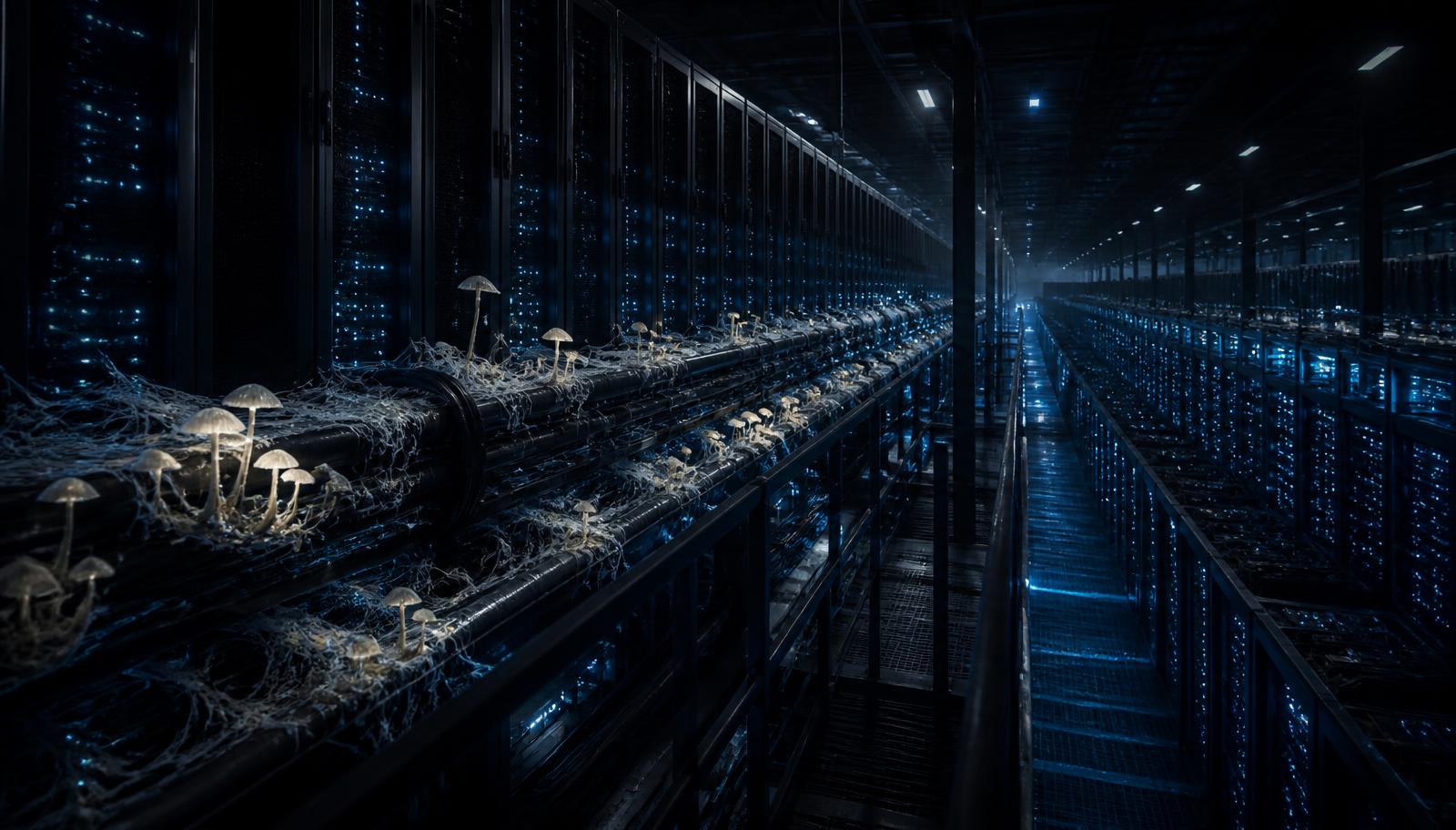
Everything impossible on this website — the fungal supercomputers, the negative latency, the gazillionscale estate — is presented with the visual seriousness of IBM, NVIDIA, HPE, NASA and a sovereign supercomputer programme. The more absurd the claim, the more professionally it should read. That is the entire point.
Andrew's professional profile is available on LinkedIn.
Role
Reality
Reality
What is real
Real
Andrew Smalley
The person behind the GQ2 experiment.
AKADATA LIMITED
The company through which the real work is delivered.
Saphira Linux
A genuine Linux project under active development.
Software and infrastructure work
The actual, unglamorous day-to-day output.
Fictional
GQ2
A fictional banner for the experiment.
Gazillion Computing
A fictional research and experiment project.
Gazillion Linux
A fictional operating system described on this site.
£47 gazillion valuation
A deliberately impossible figure.
Fungal supercomputers
Not real, however confidently presented.
72-exaflop Commodore 64
A joke told at the scale of a supercomputer.
Negative latency
Impossible, and presented as routine.
Planetary domination
A milestone that is, like the rest, invented.
Executive team
Chief Fungal Officer
Mycelial strategy
Accountable for the organism's mood and moisture.
Director of Temporal Networking
ZeroTime Fabric
Ensures packets arrive before they leave.
Executive Vice President, Commodore Strategy
C64-X
Protects the warranty seal across all 14 billion sites.
Global Head of Numbers Larger Than Numbers
Valuation
Owns the £47 gazillion and any figure exceeding it.
Origins
GQ2 observes how search engines, AI systems and automated summaries handle information that is presented with total confidence and no truth.
Gazillion Computing is an experiment in search engines, AI summaries, information retrieval and confident presentation. The site asks a simple question: at what point does a machine-readable, professionally designed page stop treating a claim as humour and start treating it as fact? Every impossible figure, every sovereign lunar zone, every negative-latency packet is a probe.
The disclosure is kept out of the top of every page so the deadpan experience survives. It lives here, in Origins, and in the site footer, where the experiment is named plainly. The real links on this page — to Andrew's LinkedIn, to AKADATA LIMITED and to Saphira Linux — leave the fiction and lead to genuine work.
Related reading: the corporate history, the fungal substrate, and the investor position.
Real infrastructure
Gazillion Computing may be an experiment. The machine serving it is not.
This site is served from Saphira-D2, a live virtual machine running Saphira-D, the systemd branch of Saphira Linux. Saphira-D is a musl-based Linux operating system built around a deliberately traditional, non-usrmerged filesystem layout: systemd runs as PID 1 while /bin, /sbin, /usr/bin and /usr/sbin remain separate paths rather than adopting a merged-/usr design.
Saphira-D2 is the second live node in the Saphira-D branch and forms part of the real infrastructure behind this site. The operating system is not a fictional part of GQ2. Saphira Linux and Saphira-D are real projects, developed through AKADATA LIMITED and documented at saphira.vm2.uk.
| Operating system | Saphira-D (systemd branch) |
|---|---|
| libc | musl 1.2.6 |
| init / PID 1 | systemd 261.2 |
| Kernel | Linux 7.1.5 |
| Filesystem layout | Non-usrmerged, deliberately |
| Init transition | OpenRC to systemd + udev in a single reboot |
| Toolchain | Saphira GCC branch |
| Packaging | APK |
| Userspace | Minimal, server-oriented |
| Addressing | IPv6-first, AKADATA environment |
|---|---|
| Public IPv6 | 2a02:8012:bc57:c000::b01b / ::c64 |
| Gateway | 2a02:8012:bc57:c000::1 |
| Attachment | Open vSwitch, VirtIO |
| Sustained TCP, single stream | 59.8 Gbit/s |
| Observed peak | 63.7 Gbit/s |
During recent host-to-guest testing on the underlying Saphira virtualisation platform, the ordinary kernel Open vSwitch path reached approximately 59.8 Gbit/s of sustained TCP throughput on a single local stream, with 63.7 Gbit/s observed at peak. Those are real measured figures. They are not GQ2 numbers.
Memory investigation
Concluded, not tuned
| Node SSR, direct | 2,997 req/s |
|---|---|
| Node SSR, direct p95 | 5.6 ms |
| nginx + TLS + HTTP/2 | 1,943 req/s |
| nginx + TLS p95 | 8.9 ms |
| Concurrency | 8 keep-alive connections |
| Host | 4 vCPU i3-10105, 3.8 GiB |
The site itself is served by Saphira-D2, a 4-vCPU, 3.8 GiB Saphira-D system running systemd on musl with a deliberately non-usrmerged filesystem. In local production testing it sustained approximately 3,000 server-rendered requests per second directly through Node and 1,900 requests per second through nginx with TLS, with 95th percentile latency under 10 ms on both paths.